



Khamenei's assassination: Will it open the door to satisfactory outcomes for the US and Israel?
M.C.N.
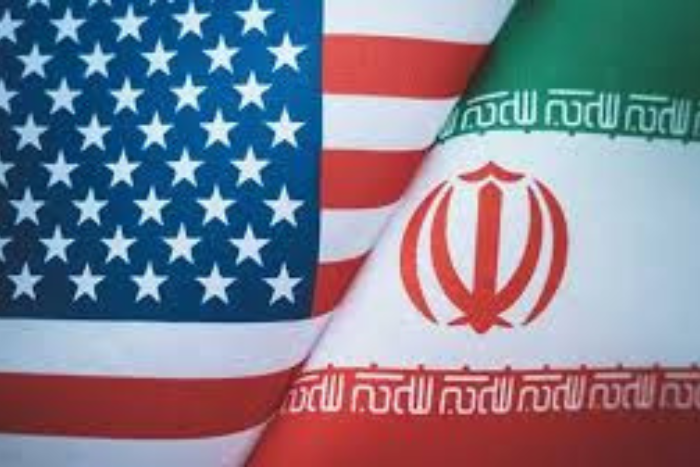
An analysis published by Reuters on Sunday, March 1, stated that what undermines this moment of relief for many oppressed Iranians is that the assassination of Supreme Leader Ali Khamenei is a dangerously simplistic solution to a highly complex problem.
Khamenei's rule was characterized by mismanagement and ultimately ended in one of his most brutal acts of repression: the violence his regime used to maintain power.nbsp;
His elimination sparked celebrations in Tehran—as well as a 40-day period of official mourning and pro-regime rallies—but it also sparked a struggle among the regime's remaining leaders to determine the next step.Israeli officials insisted that the strike was carried out hastily to take advantage of a window of opportunity during the day, coinciding with a meeting of senior Iranian leaders. US President Donald Trump appears to have resorted once again to the Venezuela strategy, hinting that he was considering a successor to Khamenei, as he did after Nicolas Maduro, preferring Vice President Delcy Rodriguez as his interlocutor.
When asked on Saturday evening, Trump notably refrained from specifying who he thought would take on this role in this case, but Tehran will soon have to announce a plan for the succession of power. However, Iran is not as persuadable as Venezuela has been so far.
Over 47 years, theocracy (rule by clerics) has turned into tyranny and corruption. A large part of the country's population of over 90 million depends on the regime for their livelihood, while a minority has blood on their hands for helping the regime suppress the opposition.
When the Assad regime in neighboring Syria collapsed in late 2024, its security forces were exhausted and its economy devastated by years of civil strife. Iranian security forces had just received a refresher course in the use of brutal force during their suppression of the January uprising.
The United States and Israel seem to agree that removing the upper echelons of the Iranian regime would put them in a better position. Along with Khamenei, Defense Minister Aziz Nasirzadeh, Secretary General of the Defense Council Ali Shamkhani, and Revolutionary Guard Commander Mohammad Pakpour were all killed within hours. This security elite had recently been reshuffled after the devastation of the 12-day war in June 2025.
But history lacks good examples of air campaigns that easily toppled regimes and led to their replacement by ones favored by the attackers. Hardliners will rush to fill the void, simply to survive. They may be reluctant to be the next target of conflict with the US and Israel, but this fear has not led to a shortage of candidates in the past. Could a consensus emerge that, in order for the authoritarian regime to survive, it must make peace with the US and the region and pretend to be moderate for a while? Perhaps. But that risks showing weakness, which Tehran strongly dislikes. There is no easy alternative in the form of a ready-made opposition government that Trump could promote.Reza Pahlavi, the heir to the long-deposed shah, cannot storm into Tehran and take charge without risking assassination by an angry Revolutionary Guard. There is no longer any real opposition within Iran. As in Caracas, any solution is likely to come from within the remnants of the regime.In many ways, Khamenei's mistakes have made the task easier for the United States and Israel. His repression and economic mismanagement mean that Iran is in desperate need of change, and its people are yearning for greater freedom and prosperity.
His explicit orders to respond fiercely to these strikes—which were apparently carried out after his death—have angered most countries in the region, damaging neighbors who had urged the US to back down from the strikes and who are now angry that Iran is targeting their civilians with missiles and drones. Iran appears to be continually weakening itself, but it does not stop.>But the real danger now lies in fragmentation; no single faction can win on its own, and sporadic violence and celebrations are dividing Iran, leading to a collapse that destabilizes not only the country but the entire region.
This danger is compounded by Trump's short attention span and aversion to prolonged military intervention. The president lacks sufficient political capital at home, has not prepared his electorate for war, and does not have the resources on the ground to wage this battle for months.
He has also kept his goals limited and achievable. He can claim that Iran's nuclear program, its missiles, and its ability to harass the United States have been dealt another serious blow.
Trump has not explicitly declared regime change to be his goal, but he has encouraged it. He can declare victory at any moment he chooses, regardless of what that means for Iran's future.
The superior technology, intelligence, and firepower of the United States and Israel have enabled them to find a quick and simple solution to their chronic Iranian problem. But they have not yet addressed the glaring and perhaps insurmountable complexities in Iran that have kept it a thorn in the side of the United States for half a century.
Related Articles

Russia warns of oil market disruption due to closure of Strait of Hormuz
Mar 1
US military announces first casualties among its soldiers in operation against Iran
Mar 1
Mahmoud Ahmadinejad killed in missile attack in Tehran
Mar 1
One dead and 32 wounded in Iranian attacks on Kuwait
Mar 1
US study calls for Sudanese Islamists to be designated a terrorist organization and warns of regional repercussions
Mar 1